Upgrade from Lance: Move beyond basic water-level
and wave monitoring to directional waves, directional spectra and optional surface current data,
providing a more complete operational view for complex sea-state decisions.
Explore the Trident Series sensor array from full product, connector, body finish, array layout and 3D view perspectives.
Full product viewTrident directional-wave system with
marine-grade radar units and array mounting structure.Marine connectorSealed, corrosion-resistant I/O connection
designed for dependable offshore deployment.
Loading 3D model...Unable to load the 3D model.
3D interactive viewDrag to rotate the product, use the material buttons to switch models, or reset the camera at any time.Body finishClean metallic finish, refined logo placement and
marine-ready protective treatment.Three-radar arraySynchronized multi-point observation enables
wave direction and directional spectrum processing.
Choose a fixed, motion-compensated, explosion-proof or combined directional-wave configuration
based on platform movement and hazardous-area requirements.
T3000
Trident 3000
Fixed Installation Model
Triple-beam directional wave radar for fixed platforms, offshore wind foundations and shore-based monitoring stations.
Compare measurement range, directional capability and optional configurations across all four Trident models.
Parameter
Trident 3000
Trident 3010
Trident 3020
Trident 3030
Radar-to-water distance
2-75 m
2-75 m
2-75 m
2-75 m
Ranging accuracy
±3 mm
±3 mm
±3 mm
±3 mm
Sampling frequency
10 Hz
10 Hz
10 Hz
10 Hz
Tide level accuracy
±1 cm
±1 cm
±1 cm
±1 cm
Wave height range
0-60 m
0-60 m
0-60 m
0-60 m
Wave period range
1-100 s
1-100 s
1-100 s
1-100 s
Wave direction
0-360°
0-360°
0-360°
0-360°
Wave direction accuracy
±2°
±2°
±2°
±2°
Surface current speed
Optional
Optional
Optional
Optional
Surface current direction
Optional
Optional
Optional
Optional
Motion compensation
-
Supported
-
Supported
Explosion-proof configuration
-
-
Supported
Supported
Surface current speed and direction are optional functions enabled according to software licensing and project configuration.
Core mechanical, electrical, environmental and connectivity specifications for engineering review.
S
Category 01
System
System architecture
Three-point radar array
Radar system
FMCW frequency-modulated continuous wave
Core outputs
Water level, waves, wave direction and directional spectrum
Optional outputs
Surface current speed and direction
M
Category 02
Mechanical
Dimensions
Ø209 × 196 mm per radar unit
Material
Aluminum alloy with micro-arc oxidation and electrophoresis treatment; POM
Installation
Three-point array on fixed, vessel or floating platform structures
E
Category 03
Electrical & Environment
Supply voltage
9-27 VDC
Operating temperature
-30°C to +65°C
Protection rating
IP67
C
Category 04
Communication & Storage
Communication interface
Ethernet, expandable by configuration
Local storage
SD card local storage
Expandable communication
4G / 5G and BeiDou communication module
Supported platforms
OceaXFusion and OceaXCloud
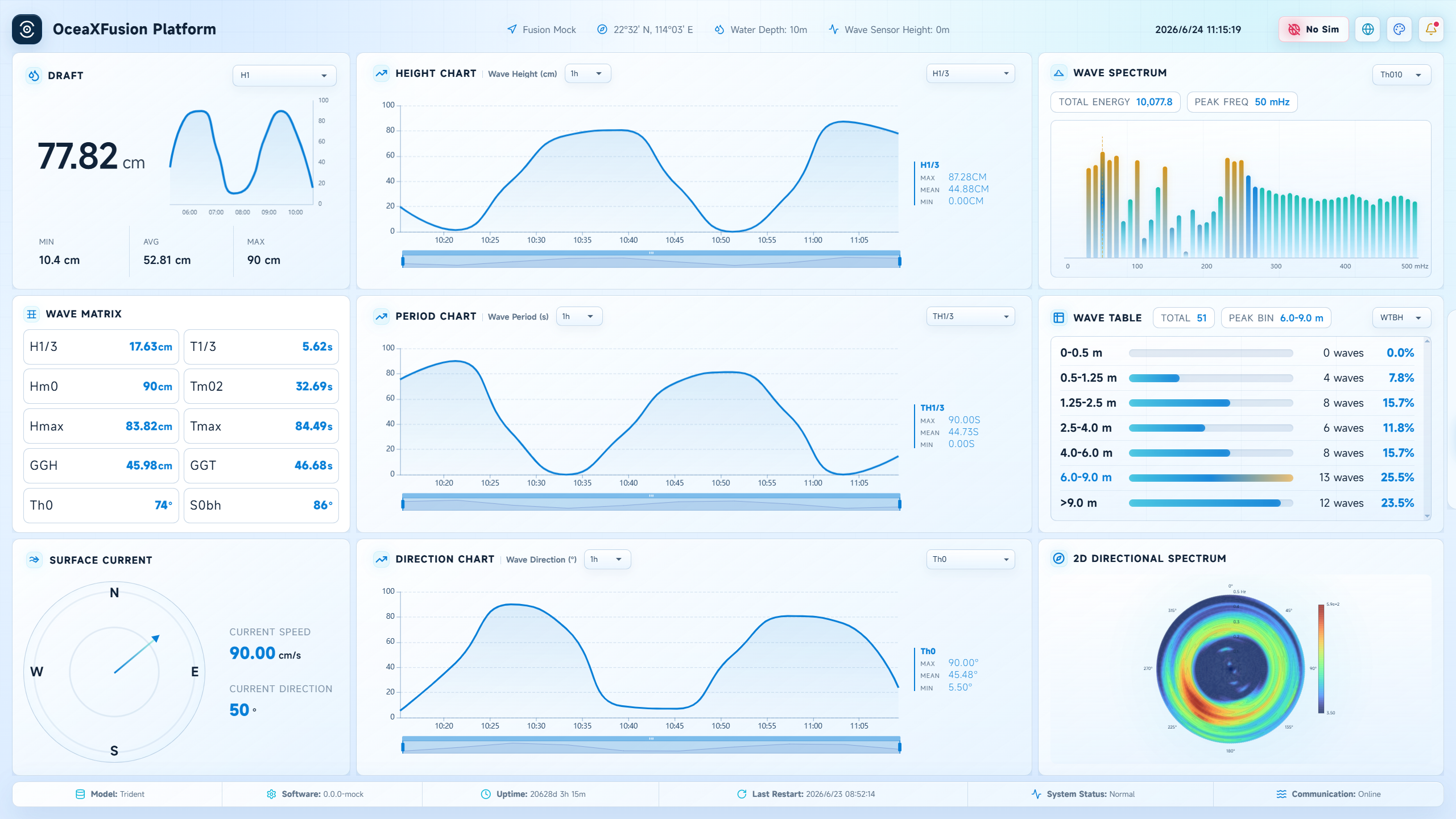
Trident Series connects to OceaXFusion, OceaXFusion Cloud and OceaXFusion Mobile for directional wave visualization, reports, cloud access, mobile monitoring and third-party integration.
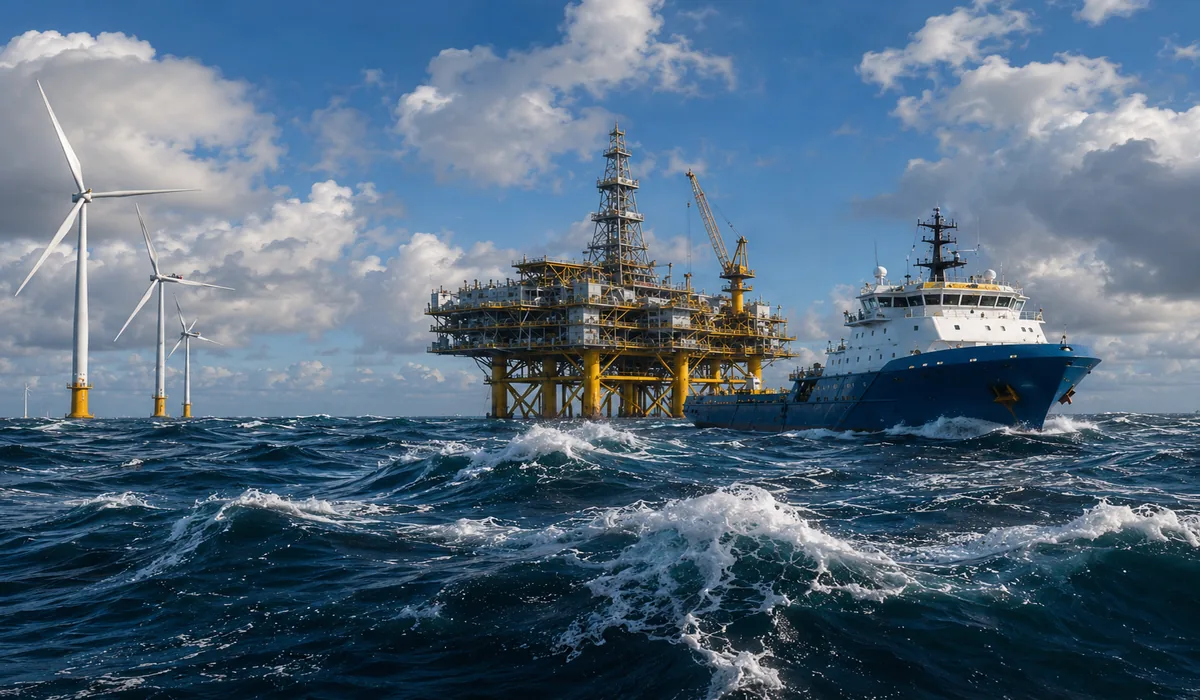
Trident Series supports offshore wind, oil and gas, vessel and floating-platform projects that need
directional waves, directional spectra and optional surface current data.
01
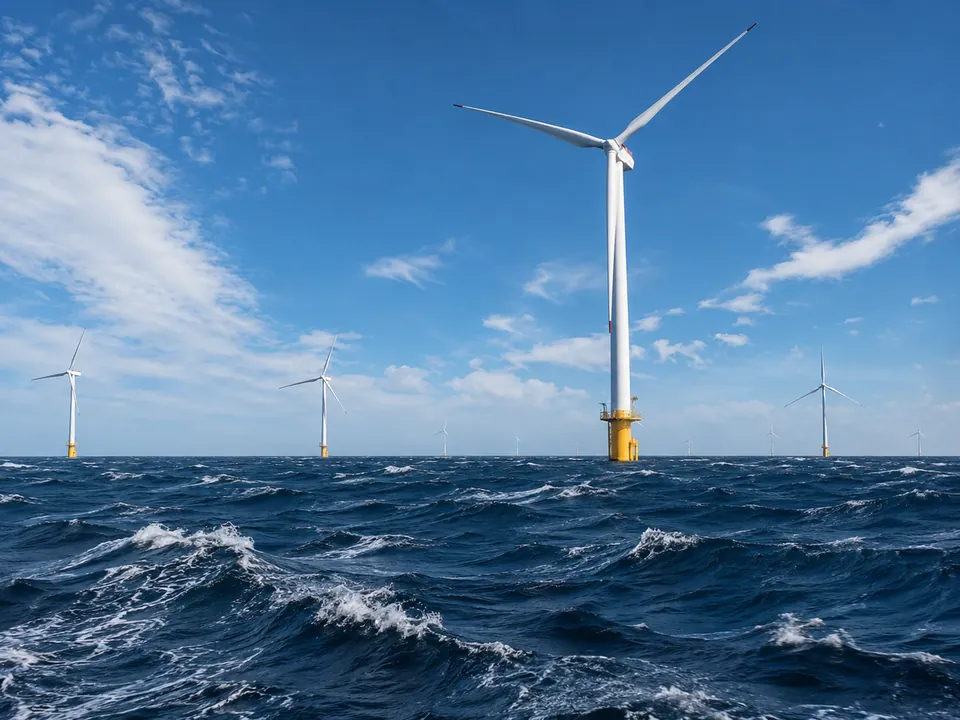
Offshore Wind Platforms
Directional sea-state intelligence for installation, operation and maintenance planning.
02
Oil & Gas Platforms
Explosion-proof directional monitoring options for high-risk offshore environments.
03
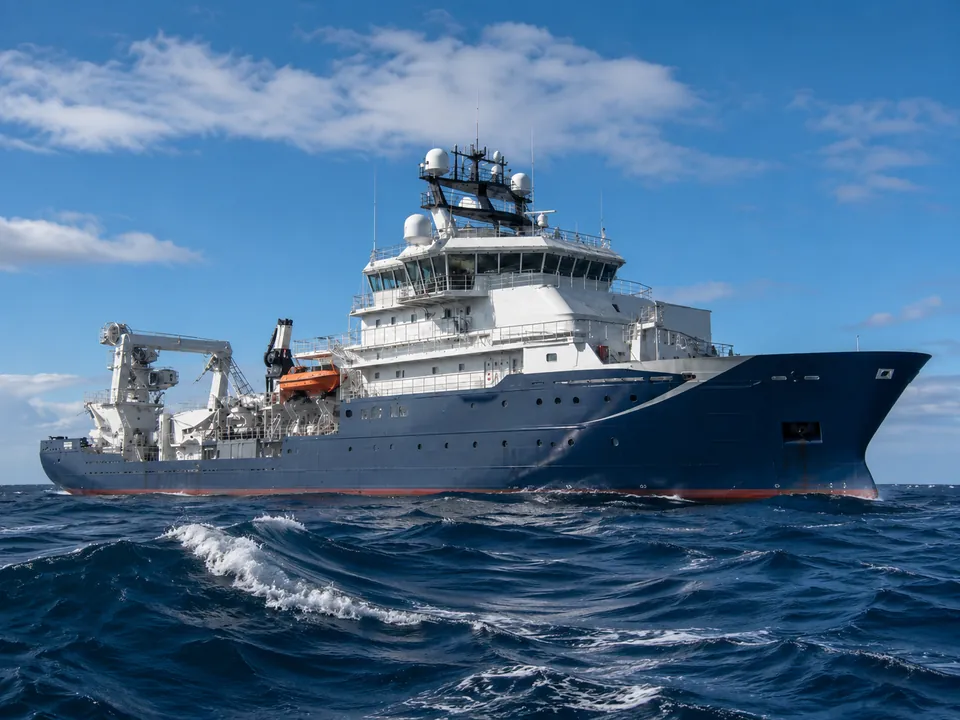
Vessels & Floating Platforms
Motion-compensated directional-wave data for dynamic carriers and floating structures.
Trident 3000 / 3020 suit stable fixed structures, while Trident 3010 / 3030 add IMU motion
compensation for vessels and floating platforms.
Installation Methods
Three-point array installation with defined radar spacing, orientation and mounting geometry, suitable for shore structures, fixed platforms, vessels and floating platforms.
Expansion Options
Mounting bracket, expansion junction box, 4G communication module, BeiDou communication module, Starlink terminal, meteorological sensor, solar power kit and OceaXFusion license.
01What is the difference between Trident 3000, 3010, 3020 and 3030?
Trident 3000 is the fixed-platform basic model, 3010 adds motion compensation, 3020 is the
explosion-proof fixed model, and 3030 supports both explosion-proof configuration and
motion compensation.
02What is the difference between Trident and Lance?
Trident adds directional waves, directional spectrum data and optional surface current
measurements for projects that require a more complete view of complex sea states.
03Are surface current speed and direction included as standard?
No. Surface current speed and direction are optional functions enabled according to software
licensing or project configuration.
04Can the data connect to OceaXFusion or third-party systems?
Yes. OceaXFusion, OceaXFusion Cloud and OceaXFusion Mobile provide local, cloud and mobile access, while Ethernet and project-specific interfaces support third-party system integration.
Not sure which model fits your platform?
Talk to DynoceaX for configuration support and a model recommendation tailored to your platform.